Why Being Great At Google Ads Isn’t Enough
The best PPC results don’t come from better bidding strategies alone. They come from understanding the business behind the account, asking better questions and building the relationships that give you the answers.

Great PPC doesn’t come from understanding Google Ads alone. It comes from understanding the business behind the account.
I’ve been working in PPC for over 15 years and I’ve yet to hear a board meeting start with, “How’s our Quality Score looking?” That might sound obvious, but I think it matters. I’ve also never heard a business owner say their ambition was to improve their click-through rate.
Nobody builds a business because they want a better click-through rate. Nobody hires a team, takes on risk, manages cash flow and works through all the messy reality of running a company because they want a lower CPA in Google Ads.
Businesses care about revenue. Profit. Growth. Customer quality. Capacity. Sustainability. The things that determine whether the business is genuinely moving forward.
That does not mean PPC metrics are pointless. Far from it. I spend a lot of my working life looking at them. CTR, CPC, CPA, ROAS, impression share, conversion rate and search terms all matter. They help explain what is happening inside an account. The problem starts when those metrics become the destination.
A lower CPA is not always better if lead quality suffers. More conversions are not always useful if the sales team cannot turn them into customers. A higher ROAS might impress someone looking at a dashboard, but it does not automatically improve the business.
Metrics are the levers we pull inside a PPC account. They should not be mistaken for the business outcomes we are trying to influence.
Metrics tell us what’s happening. They don’t tell us whether the business is succeeding.
That distinction has shaped how I think about paid media more than any platform update, automation feature or new campaign type ever has.
PPC doesn’t exist in isolation. It exists to support a business. That’s an important distinction because once we start treating PPC as a commercial function rather than just a marketing channel, the conversations change. We stop asking how to improve the dashboard and start asking how to improve the business. In my experience, that’s where the biggest opportunities are usually found.
Metrics Aren’t The Problem, Visibility Is.
I don’t think most PPC practitioners deliberately optimise for the wrong things. In reality, we optimise to the deepest point we can see.
If you’re an agency, you might only have visibility as far as leads or enquiries. If you’re a freelancer, you may receive a monthly spreadsheet showing conversion numbers but little else. Even in-house teams can find themselves working in silos, separated from sales, customer service or finance.
The result is often the same. Marketing celebrates an increase in lead volume, sales questions the quality of those leads, finance wonders why acquisition costs have increased and leadership is trying to understand why the business isn’t growing as quickly as the reports suggested.
Nobody is necessarily wrong. They’re simply looking at different parts of the same journey.
I’ve seen this happen in businesses of all sizes. Sometimes it’s because the right data isn’t available, sometimes it’s because it isn’t shared and sometimes it’s simply because nobody has thought to join the dots.
Whatever the reason, the outcome is the same. We end up optimising campaigns using the best information available, rather than the best information possible. That’s an important difference.
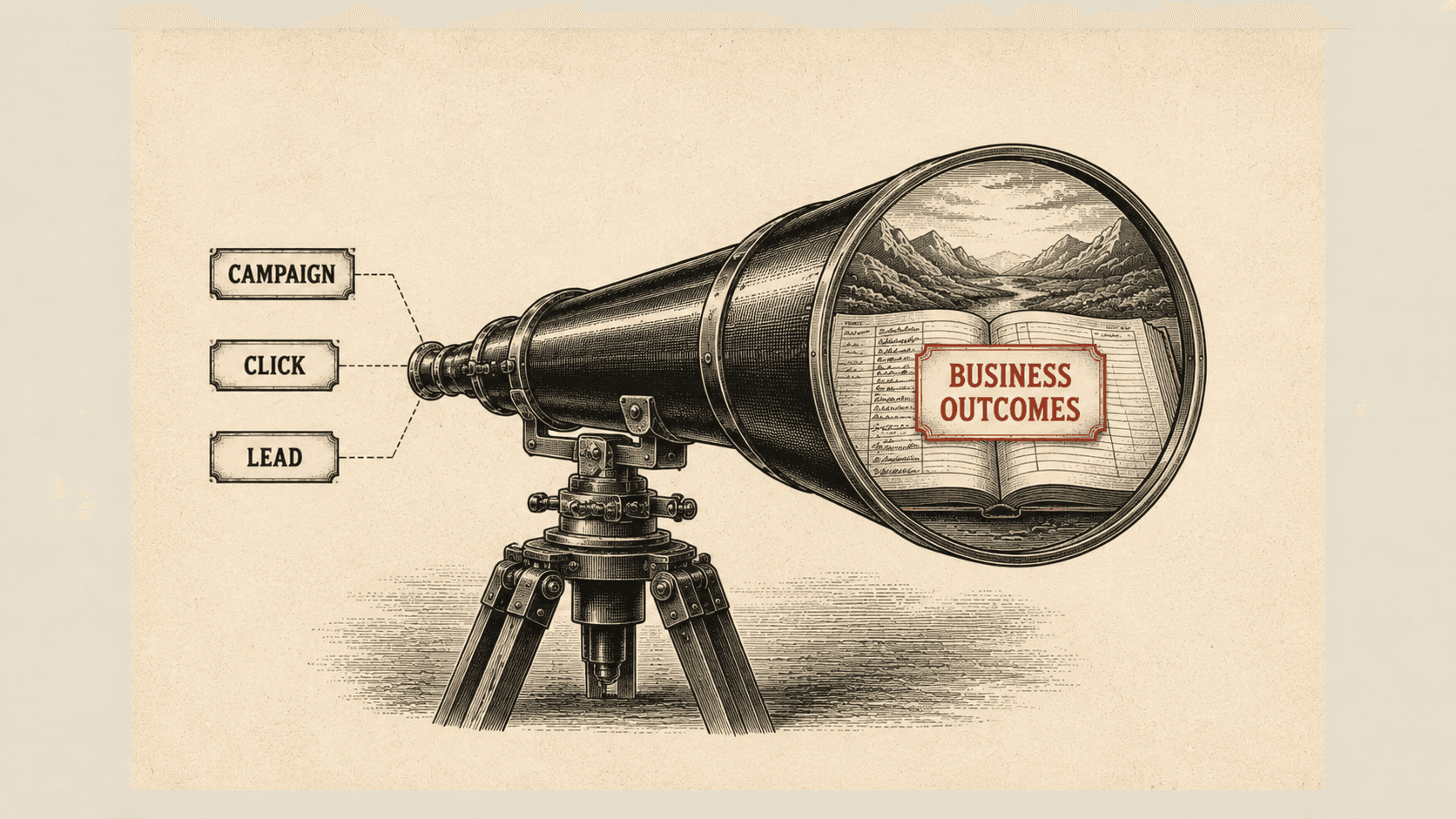
The further your visibility extends beyond the PPC platform, the better your decisions become. Not because Google Ads suddenly works differently, but because your understanding of the business does.
| Stage | Visible to many PPC teams? |
|---|---|
| Campaign | ✅ |
| Click | ✅ |
| Lead | ✅ |
| Sale | Sometimes |
| Revenue | Occasionally |
| Profit | Rarely |
| Customer Lifetime Value | Very rarely |
Every step further down the journey improves the quality of the decisions you can make above it.
You can’t optimise towards information you don’t have.
Better Questions Create Better PPC
Earlier in my career, I spent a number of years working very closely with one of the UK’s largest insurance brokers. We weren’t always given every commercial metric, and understandably so. But over time, as the relationship developed, we built enough trust to gain a much better understanding of what success actually looked like beyond the PPC interface. That changed the questions I asked.
Instead of simply asking whether we could reduce CPA, I found myself asking whether we could reduce it without compromising the quality of the policies being written.
Instead of celebrating an increase in lead volume, I became more interested in whether those additional leads were actually creating more sales, or simply more work.
Instead of asking which keywords converted, I started asking whether those keywords were attracting the types of customers the business actually wanted more of.
The metrics still mattered. I still wanted to increase lead volume. I still wanted to improve CTR, reduce wasted spend and drive down CPA wherever I could. The difference was that I stopped looking at those improvements in isolation. Every optimisation became part of a bigger question.
How does this help the business perform better?
The best PPC accounts I’ve worked on didn’t succeed because we stopped caring about platform metrics. They succeeded because we connected those metrics to what the business was actually trying to achieve.

Looking back, that’s probably one of the biggest shifts in my career. I realised that becoming better at PPC wasn’t just about understanding Google Ads more deeply. It was about understanding the business behind the account more deeply.
It’s also one of the reasons my first conversations with new clients today rarely start inside Google Ads. Before I look at campaign structure, keywords or bidding strategies, I want to understand the business. What are the priorities? Where are the commercial pressures? What does success actually look like? Understanding the business comes before understanding the account. Without that context, it’s surprisingly easy to optimise for the wrong thing.
That’s a mindset I’ve carried with me ever since and one that continues to shape how I work with clients through Precisionly today.
Better Relationships Create Better Optimisation
Over the years, I’ve become convinced that better PPC rarely starts with another platform feature. More often, it starts with better and more honest conversations.
I’ve seen agencies expected to improve lead quality without ever being shown which leads actually became customers. I’ve seen in-house teams sit just a few desks away from the sales team, yet rarely hear what happened after an enquiry came in. I’ve also seen businesses change priorities, products or capacity without realising those changes should influence the way campaigns are managed.
Nobody was trying to make poor decisions. They were simply making decisions based on incomplete information.
None of those are platform problems, they’re visibility problems.
The quality of your optimisation is limited by the quality of your relationship with the business.
The strongest client relationships I’ve experienced weren’t built because every month was a success. They were built because we trusted each other enough to have honest conversations when performance wasn’t where we wanted it to be.
Sometimes the answer was to push harder, sometimes it was to pull back and sometimes the issue had nothing to do with the PPC account at all.
Markets change, competitors react, products evolve, sales processes break and tracking fails. None of those things show up neatly in a Google Ads or Microsoft Ads dashboard, yet every one of them can influence performance.
The more conversations you have outside of the PPC platform, the better the decisions you make inside it.
What Those Conversations Look Like
Some of the best insights I’ve received haven’t come from monthly reports or PPC dashboards. They’ve come from sitting with sales teams, asking what they’re hearing on the phone, understanding why certain enquiries convert and others don’t, or simply asking business owners, “What does a great customer actually look like?”
Those conversations have influenced my PPC decisions far more than many platform updates ever have.
Google Ads and Microsoft Ads are only one part of the sales process. It just happens to be the part we can see most clearly.
The PPC practitioners I’ve learned the most from all have one thing in common. They’re curious. Not just about campaign performance, but about the businesses behind those campaigns. They’re comfortable asking questions that sit well outside a PPC account.
- What does a good customer actually look like?
- Which enquiries waste the sales team’s time?
- Which products or services matter most commercially?
- Has anything changed in the business that should change how we advertise it?
Curiosity works both ways.
Agencies and consultants need to ask better commercial questions.
Businesses need to be willing to share what success actually looks like beyond marketing metrics.
In-house teams need to spend as much time understanding sales, finance and operations as they do campaign settings.
None of us can optimise towards information we never receive.
Conclusion
The next time you review an account, ask yourself one question.
Am I optimising for what the platform can see, or what the business is actually trying to achieve?
The quality of your optimisation is ultimately limited by the quality of your relationship with the business.